
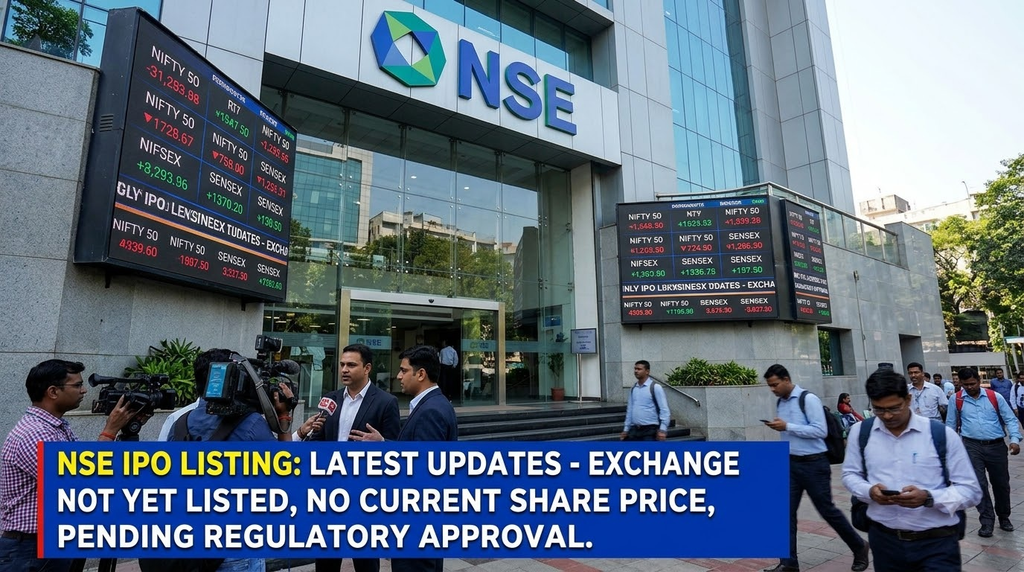
NSE Share Price Today: Shares of the National Stock Exchange of India (NSE) made their much-awaited stock-market debut on Thursday, September 24, 2026. The NSE IPO made a relatively muted debut compared with expectations, with shares listing at ₹1,800 per share on the BSE, against the IPO issue price of ₹1,785.
The listing price represents a 0.84% premium over the final IPO price. The debut was below some pre-listing market expectations, although NSE shares subsequently attracted buying interest during the trading session.
NSE Share Price Today
The NSE IPO was priced at ₹1,785 per share, at the top end of its ₹1,700–₹1,785 price band.
On listing day, NSE shares opened at around ₹1,800 on the BSE, giving IPO investors a modest initial gain.
At ₹1,800, the initial gain was:
₹1,800 − ₹1,785 = ₹15 per share
This represents a listing gain of approximately 0.84%.
NSE IPO Listing Price
The final NSE IPO listing price was:
₹1,800 per share
This compares with the IPO issue price of ₹1,785 per share.
For one IPO lot of eight shares, the initial listing gain at ₹1,800 would be approximately:
8 × ₹15 = ₹120
The IPO lot size was eight shares, while the minimum investment at the upper price band was ₹14,280.
NSE IPO: Key Details
| Particular | Details |
|---|---|
| Company | National Stock Exchange of India Ltd |
| IPO size | Approximately ₹22,562 crore |
| IPO type | Offer for Sale |
| Price band | ₹1,700–₹1,785 |
| Final issue price | ₹1,785 |
| Lot size | 8 shares |
| Minimum investment | ₹14,280 |
| IPO opening date | September 17, 2026 |
| IPO closing date | September 21, 2026 |
| Listing date | September 24, 2026 |
| Listing exchange | BSE |
| Listing price | ₹1,800 |
| Listing premium | Approximately 0.84% |
The issue was structured as an offer for sale, meaning existing shareholders offered their shares to public investors rather than NSE raising fresh capital through the issue.
NSE IPO Subscription
The NSE IPO received strong demand during its subscription period. The issue was subscribed more than five times, reflecting significant investor interest in India’s largest stock exchange.
Institutional investors accounted for a substantial portion of the demand. The strong subscription was supported by NSE’s dominant position in India’s equity and derivatives markets.
Why Was the NSE Listing Gain Muted?
The NSE listing was closely watched because expectations were high before the market debut.
However, the actual listing price of ₹1,800 was only slightly above the IPO issue price of ₹1,785.
Several factors may have contributed to the relatively modest debut:
- The IPO was priced at a substantial valuation.
- Strong pre-listing expectations may already have been reflected in the issue price.
- NSE’s earnings are closely linked to market activity.
- Derivatives trading remains an important part of NSE’s business.
- Regulatory changes could affect future trading volumes and revenue.
- Investors may be focusing on the company’s long-term growth rather than the first-day listing gain.
NSE vs BSE: Why Investors Are Watching Both Stocks
The NSE listing has also increased investor interest in BSE Limited, its major listed exchange rival.
BSE is already publicly traded, making it an important benchmark for investors evaluating NSE’s valuation and future growth prospects.
Investors are likely to compare the two exchanges based on:
- Market share
- Trading volumes
- Revenue growth
- Profitability
- Valuation
- Derivatives activity
- Investor participation
- Regulatory developments
The NSE listing is also an important milestone for India’s capital-market infrastructure after years of anticipation surrounding the exchange’s public-market debut.
What Should Investors Watch After NSE Listing?
Investors tracking the NSE share price today should look beyond the initial listing gain. Several factors could influence the stock’s future performance.
1. Trading Volumes
NSE’s business is closely connected to trading activity across its various market segments. Sustained trading volumes can support transaction-related revenue.
2. Derivatives Business
Options and other derivatives are an important part of NSE’s business. Changes in regulations, investor behaviour and derivatives volumes could have a significant impact on future earnings.
3. Valuation
The IPO was priced at ₹1,785 per share. Investors should therefore consider whether NSE’s expected earnings growth justifies its post-listing valuation.
4. Competition With BSE
BSE’s market performance provides an important comparison for investors assessing NSE’s valuation and growth prospects.
5. Regulatory Changes
Changes affecting derivatives, transaction charges, settlement systems or other market activities could influence NSE’s future revenue and profitability.
NSE Share Price Today: Key Takeaway
The NSE share price listing today was ₹1,800, giving investors a modest 0.84% listing gain over the ₹1,785 IPO issue price.
While the debut was relatively muted compared with some pre-listing expectations, investor interest in NSE remains high because of its strong position in India’s financial markets.
For investors, the more important question will be NSE’s long-term earnings growth, market dominance, trading volumes, regulatory environment and valuation, rather than the first-day listing gain.
This article is for informational purposes only and should not be considered investment advice.
FAQs
What is the NSE share price today?
NSE shares made their stock-market debut at ₹1,800 per share on September 24, 2026, compared with the IPO issue price of ₹1,785.
What was the NSE IPO listing price?
The NSE IPO listing price was ₹1,800 per share, representing an approximately 0.84% premium over the IPO issue price.
What was the NSE IPO price?
The NSE IPO price band was ₹1,700 to ₹1,785 per share. The final issue price was fixed at ₹1,785.
What was the NSE IPO lot size?
The NSE IPO lot size was 8 shares. At the upper price of ₹1,785, one lot required an investment of ₹14,280.
When did NSE shares list?
NSE shares listed on September 24, 2026.
At what price did NSE shares list?
NSE shares listed at ₹1,800 per share, compared with the IPO issue price of ₹1,785.
At what time did NSE shares list?
The NSE IPO listing took place during the morning trading session on September 24, 2026.
Is NSE listed on its own exchange?
No. NSE shares made their public-market debut on the BSE rather than on the NSE itself.
What is the difference between NSE IPO price and NSE listing price?
The final NSE IPO issue price was ₹1,785, while the listing price was ₹1,800. The difference was ₹15 per share, equivalent to approximately 0.84%.
Is NSE share price expected to rise?
Future NSE share-price performance cannot be predicted with certainty. Investors should consider earnings growth, trading volumes, derivatives activity, regulatory developments, valuation and broader market conditions before making an investment decision.
What is the NSE IPO size?
The NSE IPO size was approximately ₹22,562 crore, making it one of India’s largest public offerings.

D Singha is a Civil Engineer with expertise in bridge design, structural engineering, and infrastructure projects. He shares insights on engineering, construction practices, technology, and professional development.